

Commercial Property Maintenance: What Property Managers Should Expect From a Vendor
Commercial property maintenance works best when the vendor does six things well: shows up when promised, keeps managers and tenants informed, responds quickly, keeps its business paperwork current, behaves professionally in occupied spaces, and prices within a fair range. Property managers tend to weigh them in that order, with price last.
A property manager rarely has time to chase a vendor. Property management means tenant calls, lease renewals, owner reports and a steady stream of repair requests, and every request that needs a second phone call is a request the vendor made harder than it had to be. That is why the vendor decision comes down to how much work the vendor takes off your plate, and the hourly rate on a proposal is only one part of it.
The sections below cover what to expect from a commercial property maintenance vendor in California: six criteria, a scorecard you can copy, a pre-job paperwork checklist, the price ranges The Handy Geeks publishes for commercial work, and a three-step trial that limits your risk. We serve Southern California and the Bay Area, so we also explain how we run each step.
At a glance
- Reliability comes first in commercial property maintenance. A vendor that keeps every commitment saves you more than one that quotes a few dollars less.
- Response has three moments: first contact with the tenant, how far out the visit is booked, and arrival inside the window.
- Tenant communication is part of the job. A tenant who has to call you to ask whether the vendor is coming has become your problem.
- Ask for paperwork before work starts: certificate of insurance, W-9, written scope, a not-to-exceed process and two references.
- Trial small, then widen. One punch list, then one turnover, then a recurring walkthrough.
What is commercial property maintenance?
Commercial property maintenance is a recurring repair and upkeep service that keeps occupied commercial buildings safe, accessible and rentable. A vendor fixes hardware, finishes and fixtures through scoped work orders, scheduled visits and written closeout records, so a property manager sees cost and completion for every repair.
What do property managers look for in a commercial property maintenance vendor?
Six things, in roughly this order: reliability, communication, response speed, documented business credentials, manner inside occupied spaces, and fair pricing. The sections below define each one and give you a way to test it before you send real work.
1. Reliability
Reliability means the vendor does what it said it would do, by the time it said, for the price it quoted. The standard worth holding a vendor to is strict: after a year of work, you should not be able to name a single time the vendor missed a commitment.
How to test it: ask for two references from managers who have used the vendor for a year or more, and ask each one about missed appointments and surprise charges rather than about quality. Quality is easy to claim. Follow-through is easier to verify.
2. Communication
Two lines of communication matter: vendor to manager, and vendor to tenant. The manager line needs a confirmed scope, a schedule and a closeout. The tenant line needs a first contact, an arrival window and a heads-up if plans change. Everyone involved should know what the next step is.
How to test it: send a test request and see how long it takes to get a written confirmation of scope. The first reply shows you how the next fifty will go.
3. Response speed
Speed has three parts, covered in detail below: how soon the vendor contacts the tenant, how far out the visit is booked, and whether the vendor arrives inside the window it promised.
How to test it: ask for numbers on all three, then check them against your trial job.
4. Documented business
You do not need the biggest company in town. You need to see a real business: insurance, a completed W-9, a vendor packet, references and any local business registration your jurisdiction requires. A vendor that produces this paperwork the same day usually runs the rest of its operation the same way.
How to test it: request the full packet before the first job and note how long it takes to arrive.
5. Manner inside occupied spaces
Tenants and store staff judge your company by who shows up at the door. The vendor should introduce itself, respect the space, protect floors and fixtures, and clean up. Nobody needs a conversation, but people should feel comfortable having the technician on site.
How to test it: ask to see the work vehicle and the tool setup. An organized vehicle usually means an organized visit.
6. Fair pricing
Fair does not mean lowest. You answer to owners, and a price you can defend with a written quote, a line-item scope and a not-to-exceed cap is easier to explain than a low number that grows halfway through the job.
How to test it: compare at least two written quotes line by line, including minimum charges, trip fees and after-hours terms. The pricing section shows the ranges we publish.
Why does reliability matter more than the lowest bid in commercial property maintenance?
The cheapest vendor tends to cost more once you count what happens after the invoice.
A missed appointment turns into a second visit, the second visit turns into a tenant complaint, and the complaint costs you manager hours and sometimes an owner conversation. In commercial buildings, an unfixed door closer or a leaking fixture can also become a safety or access problem, which is why small commercial repairs that get expensive deserve a fast, dependable response.
Reviews add another layer. Tenants post about maintenance experiences, and owners can read those reviews when they decide whether your company looks well run. A vendor that keeps its word protects both the building and your reputation.
Budgeting works the same way. A vendor that handles repairs while they are small keeps commercial property maintenance spending predictable, which is the argument behind our guide to setting a commercial maintenance budget.
What does fast response mean for commercial property maintenance?
Commercial property maintenance depends on a service-level agreement or an equivalent written response standard. The standard names three moments: first tenant contact, scheduling lead time and arrival inside the agreed window. The Handy Geeks publishes its own number for the second moment: a scheduling confirmation within two to four hours on set-up accounts.
Fast response is three measurable moments, and a vendor should be able to quote a number for each one.
- First contact: how long after you assign the work order the vendor reaches the tenant or site contact.
- Lead time: how far out the visit is scheduled for a small, non-urgent job.
- Arrival: whether the technician shows up inside the agreed window.
Our published standard for urgent commercial calls on set-up accounts is a scheduling confirmation within two to four hours. Dispatch and office hours run Monday through Sunday, 8 AM to 6 PM, and we schedule evening and weekend crews when a job has to happen around business hours. Those visits are billed at a published multiplier. See the commercial rates and not-to-exceed guide for the numbers.
How should a commercial maintenance vendor communicate with tenants?
A good vendor makes contact before the tenant has to wonder, confirms an arrival window, sends a heads-up when the technician is close, and closes the loop with you afterward. A short, consistent message does most of the work. Here is a template you can ask a vendor to use or adapt:
Hi [Name], this is [Vendor] on behalf of [Management Company]. We are scheduled to repair [item] at [address] on [date], between [start time] and [end time]. Reply YES to confirm or call [number] to reschedule. We will text you when we are about 30 minutes away.
Know the entry rules. For residential units, California Civil Code section 1954 generally requires reasonable written notice before non-emergency entry, states the date, approximate time and purpose, and presumes 24 hours is reasonable. Entry is generally limited to normal business hours unless the tenant consents. For commercial tenants, the lease usually sets access terms instead. Ask your vendor to follow whichever applies, and check your lease and local rules. This is general information, not legal advice.
Commercial property maintenance during a tenant turnover includes door closer adjustment, lock service and wall repair. Storefront door closers also touch the Americans with Disabilities Act because closing speed and opening force affect how easily a door opens. The 2010 ADA Standards from the U.S. Department of Justice set closer timing in section 404.2.8, and 28 CFR 36.211 requires a public accommodation to keep accessible features in operable working condition. Our ADA storefront door requirements guide covers the door checklist. Landlord-tenant law adds an entry rule for residential units: California Civil Code 1954 presumes 24 hours’ written notice is reasonable.
What should a commercial maintenance vendor provide before the first job?
A vendor onboarding packet is a document set that proves a maintenance vendor is insured, payable and accountable before work starts. The packet includes a certificate of insurance, a Form W-9, a written scope, the not-to-exceed process, invoice terms and two references from long-term clients.
Commercial property maintenance requires a certificate of insurance and a Form W-9 before the first visit. The Handy Geeks carries $2 million in commercial general liability insurance, and the certificate of insurance is usually ready the same day. A property manager who files both documents before the first work order avoids a payment delay after the repair is finished. The standard ACORD 25 certificate states that it is issued as a matter of information only and confers no rights on the certificate holder, so ask for an additional insured endorsement separately if your lease requires one.
Ask every commercial property maintenance vendor for the same packet so you can compare them fairly. A complete onboarding packet includes:
- Certificate of insurance (COI) with the coverage amount and, where your contract requires it, the endorsements you need. We carry $2 million in general liability ($1 million per occurrence, $2 million general aggregate), and the COI is usually ready the same day.
- Completed W-9 so accounts payable can set the vendor up before work starts.
- Vendor packet or onboarding form with contacts, service area and hours.
- Written scope of services that says which work the vendor performs and which it routes to another trade.
- Not-to-exceed (NTE) process: a spending cap per work order, with a written quote if the repair would cost more.
- Invoice and payment terms, ideally one itemized invoice per visit.
- Two references from managers who have used the vendor for at least a year.
- Local business registration where your city requires one.
- After-hours and urgent procedure: who answers, how fast, and what it costs.
Commercial property maintenance starts with a work order and a not-to-exceed cap that name the address and scope. A property manager who reads that work order sees the spending cap, the access window and the tenant contact in one message. Commercial property maintenance stays predictable when the vendor confirms all three items in writing before a technician is dispatched.
The NTE item is the one managers most often skip and most often regret. It keeps a small repair from turning into a surprise invoice, and it lets technicians finish a job on the first visit when the fix fits under the cap. Our guide to commercial handyman rates, quotes and NTE rules explains how caps work in practice.
What is a not-to-exceed work order?
A not-to-exceed work order is a spending authorization that caps the total cost of one repair until the vendor sends a written quote for anything higher. The cap protects the property manager’s budget, lets a technician finish a small repair in one visit, and prevents surprise invoices.
How much does commercial property maintenance cost in California?
Commercial property maintenance pricing is a billing structure that combines hourly labor, a minimum service call, a trip charge and after-hours multipliers. The Handy Geeks publishes $105 to $195 per hour in Los Angeles, $110 to $210 minimum calls and $250 to $600 monthly walkthroughs.
What does fair pricing look like for commercial property maintenance?
Fair pricing is a range you can defend, backed by a written quote. Commercial property maintenance pricing usually has several parts: an hourly labor rate, a minimum service charge, a trip charge, a multiplier for after-hours or urgent work, and flat prices for common repairs. Here are the ranges we publish:
| Billing item | Los Angeles / Southern California | Bay Area |
|---|---|---|
| Standard commercial labor | $105 to $195 per hour | $120 to $220 per hour |
| Minimum service call | $110 to $210 | $110 to $210 |
| Trip charge (listed in the written quote) | $20 to $95 | $20 to $95 |
| Scheduled after-hours or weekend work | 1.25x to 1.6x | 1.25x to 1.6x |
| Same-day urgent commercial call | 1.4x to 1.75x | 1.4x to 1.75x |
| Monthly maintenance walkthrough | $250 to $600 per month | $250 to $600 per month |
Flat prices for common repairs make quotes easier to compare. The chart below sets our published ranges next to the general contractor ranges listed in the same guide.
When you compare quotes, line up the same items: minimum charge, trip fee, labor basis (hourly, flat or NTE), material handling, after-hours terms and payment terms. A quote that looks cheaper on labor can cost more once a two-hour minimum and a dispatch fee appear. For hourly basics, see our breakdown of handyman hourly rates in Los Angeles and the Bay Area. For individual repairs, we publish cost guides for door closer replacement and restroom partition repair.
What is the Response–Proof–Paper (RPP) Method for vetting a commercial maintenance vendor?
The Response–Proof–Paper (RPP) Method is a vendor-verification framework that scores one real work order on nine checkpoints across three layers. Response covers first tenant contact, scheduling lead time and arrival inside the window. Proof covers before-and-after photos, closeout notes and two long-term references. Paper covers the certificate of insurance, Form W-9, written scope, not-to-exceed cap and itemized invoice. A vendor passes with 8 of 9 checkpoints and no layer at zero.
| Work item | The Handy Geeks published range | Typical general contractor range (rates guide) | General contractor ÷ Handy Geeks (midpoints) | Labor-hours equivalent at the $150 Los Angeles midpoint | Failure mode when the job is mis-scoped | RPP checkpoint that catches it |
|---|---|---|---|---|---|---|
| Minimum service call | $110 to $210 | $350 to $750 | 3.4x | 1.1 hours | A 2-hour minimum plus a dispatch fee is billed on a 15-minute fix | Paper: minimum, trip fee and billing basis stated in the written quote before dispatch |
| Door closer swap | $120 to $280 | $350 to $600 | 2.4x | 1.3 hours | Closer sized for the wrong door width or weight, so the door slams or fails to latch and a second visit follows | Proof: before-and-after photo plus a latch and closing-speed check in the closeout note |
| Drywall patch and paint | $85 to $250 | $300 to $650 | 2.8x | 1.1 hours | Patch shows under track lighting because sheen or primer differs, and the tenant calls back | Proof: photo taken under the space’s own lighting. Response: cure time and second-visit window agreed up front |
| Display or fixture install | $150 to $500 | $400 to $900 | 2.0x | 2.2 hours | Anchor set without blocking or a stud, so the fixture loosens under load | Paper: written scope names the mounting surface and load. Proof: photo of the mounting before it is covered |
| Monthly maintenance walkthrough | $250 to $600 per month | $750 to $1,500 per month | 2.6x | 2.8 hours | Report lists issues but nobody is authorized to fix them, so the same items repeat each month | Paper: not-to-exceed cap pre-authorizes small fixes and a written quote covers anything larger |
How to read the table: ratios divide the midpoint of the general contractor range by the midpoint of The Handy Geeks range for the same item. The labor-hours column divides our midpoint by $150, so it is an approximation, because flat prices also include materials. Ranges come from our guide to commercial handyman rates, quotes and NTE rules.
How do you score and compare commercial maintenance vendors?
A scorecard keeps commercial property maintenance vendor decisions consistent when several people weigh in. Start with the weights below, then adjust them for your portfolio. A retail center with after-hours access constraints might weight response speed higher, while a residential-heavy portfolio might weight tenant communication higher.
| Criterion | Green flag | Red flag | Question to ask |
|---|---|---|---|
| Reliability | References describe zero missed commitments over a year | References talk about quality but not follow-through | When did you last miss an appointment, and what happened? |
| Communication | Written scope and schedule confirmation come back quickly | You have to ask twice for a quote or a time | Who contacts the tenant, and how? |
| Response speed | Quotes numbers for contact, lead time and arrival | Answers with “as soon as we can” | How far out are you booking small jobs this week? |
| Documentation | COI and W-9 arrive the same day | Paperwork “to follow” after work starts | Can you send your full onboarding packet today? |
| Manner | Technician introduces themselves, protects the space, cleans up | Leaves debris or skips the heads-up | What does a technician do on arrival, step by step? |
| Pricing | Line-item quote with a stated cap | One lump number with no scope | What would push this above the quoted price? |
How does a commercial maintenance vendor compare with an in-house technician, a general contractor or a freelance handyman?
An evaluation matrix compares four ways to staff repairs at an occupied commercial property. Each row is a benchmark you can verify, and the last column states The Handy Geeks figure only where we publish one. Two rows go to the alternatives on purpose.
| Benchmark | In-house technician | General contractor | Freelance handyman | Commercial maintenance vendor (The Handy Geeks model) |
|---|---|---|---|---|
| Minimum charge for a 15-minute repair | No per-job charge; salary and benefits carried monthly | $350 to $750 (range from our rates guide) | Set by the individual; get it in writing | $110 to $210 minimum call, about 3.4x lower at the midpoint than the general contractor range |
| Monthly walkthrough with a written report | Usually an internal check, not a vendor deliverable | $750 to $1,500 | Rarely offered | $250 to $600, about 2.6x lower at the midpoint |
| Time to confirm a non-emergency request | Same day while the technician is on site; gaps during leave | Small jobs often queue behind larger projects | Depends on one person’s calendar; no written commitment | 2 to 4 hour scheduling confirmation on set-up accounts |
| Proof of insurance on request | Covered under the employer’s policy | Standard request; confirm the limits | Inconsistent; confirm before the first visit | Same-day certificate of insurance; $2M general liability ($1M per occurrence, $2M aggregate); Form W-9 on file |
| Spending control per repair | Budget line with no per-job cap | Change orders after scope is agreed | Verbal estimates | Not-to-exceed work order; written quote before anything above the cap |
| Closeout documentation | Depends on the technician’s habits | Project closeout packet for larger scopes | Text message or none | Photo closeout and one invoice per visit, net-30 for approved accounts |
| Hours and after-hours access | Overtime or on-call rota | Not typical for small work | Ad hoc | Monday to Sunday, 8 AM to 6 PM; after-hours at 1.25x to 1.6x, emergency at 1.4x to 1.75x |
| Who covers the work | One person per site | Project manager plus subcontractors | One person | A team of technicians and project managers dispatched from one office |
| Multi-site coverage | One technician per building | Project-by-project mobilization | One person’s travel radius | Southern California and the San Francisco Bay Area, coordinated from one office |
| Permitted, structural or capital projects | Not designed for it | Wins | Not designed for it | Work beyond maintenance scope is flagged before a quote is issued |
| One large building that needs a technician every day | Wins | Not designed for it | Not designed for it | Scheduled visits, not a standing presence |
How the table was built: the Handy Geeks column uses the ranges and policies published on this site. The general contractor column reuses the ranges in our rates guide, so the ratios compare against that column and are not a market survey. The in-house and freelance columns are qualitative.
A repair under roughly $1,000 that repeats across tenants favors a commercial maintenance vendor on minimum charge, scheduling and paperwork. A permitted or structural project favors a general contractor. A single building large enough to justify a full-time salary favors an in-house technician.
How should you trial a new commercial maintenance vendor?
Commercial property maintenance combines preventive maintenance with a punch list for repairs that have already failed. Facility management teams schedule the preventive visits, while the punch list captures door closers, hinges, ceiling tiles and patched drywall that need attention now. Commercial property maintenance turns each punch list item into a work order during a monthly walkthrough. The U.S. Department of Energy’s Operations & Maintenance Best Practices Guide (2002 edition) estimates that a functioning preventive maintenance program saves as much as 12% to 18% over reactive maintenance, a figure it attributes to unnamed studies.
Do not hand over the portfolio on the strength of a proposal. Run a three-step trial of any new commercial property maintenance vendor and widen the scope only after it clears each step.
- One small punch list. Pick one site with five to ten small repairs. Judge arrival inside the window, before-and-after photos, and whether the invoice matches the quote.
- One unit turnover. Use a vacant unit with a real deadline. Judge whether the vendor hit the date without chasing, whether the finish meets your move-in standard, and whether it flagged extra damage early.
- A recurring walkthrough. Move to a monthly visit. Judge whether the report arrives on schedule, whether small issues get fixed on the spot, and whether quotes arrive before a problem grows.
Treat the first jobs as a test for both sides. A good vendor treats early work orders as urgent because it wants the account, and you will see that in the response times. For scope ideas at each step, our commercial building repair and retail store maintenance pages list the repairs we handle most often.
How does The Handy Geeks handle commercial property maintenance for property managers?
The Handy Geeks takes routine commercial maintenance off a property manager’s plate, from one office at 6020 S La Brea Ave in Los Angeles, across Southern California and the Bay Area.
Our commercial team handles door closers, hinges, locks and panic hardware, drywall patching and paint touch-ups, ceiling tiles, restroom partitions and grab bars, like-for-like light fixture and switch swaps, signage and shelving, punch lists, tenant turnovers and scheduled walkthroughs. Electrical work such as fixtures, lighting, fans, troubleshooting and repairs, panels and rewiring, and EV chargers is also part of what we take on.
A new account usually moves through five steps:
- Paperwork: we return your vendor packet, W-9 and certificate of insurance.
- Walkthrough: we write up the site and note anything that needs special handling.
- Written quote: each item is priced separately.
- Scheduled window: before opening, after close or on a weekend, depending on the site.
- Invoice: one invoice per visit on net-30 terms.
Send the address, a short punch list and any photos through the quote and work-order form, or call or text +1 818-835-0556. Our commercial maintenance in Los Angeles page covers service areas and onboarding in more detail, and the portfolio shows finished work.
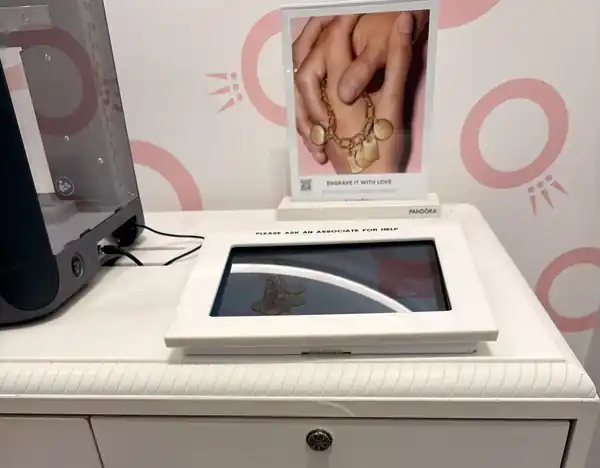
A recent retail repair: the Pandora engraving station
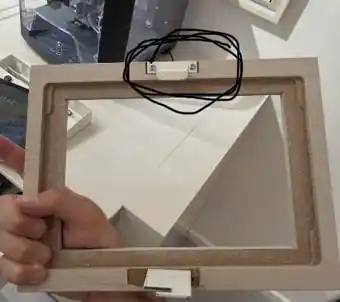
At a Pandora store, the tablet kiosk on the in-store engraving station could not lock because the latch on its enclosure was missing. Under Bernard Toth, our team documented the unit before touching it: photos of the enclosure frame and the mounting bracket on the console, and short videos showing the missing latch and how the tablet sits in its cradle. We then repaired the enclosure’s locking hardware, and the tablet is secured again.
The same sequence applies to a property: notes and photos before the work, the repair, then a record you can file. Our retail store maintenance page lists the fixtures and displays we handle most often.
Frequently asked questions
What should I look for when hiring a vendor for commercial property maintenance?
For commercial property maintenance, look for reliability, clear communication with you and with tenants, fast response, a complete paperwork packet, professional behavior in occupied spaces, and a price you can defend. Verify reliability through two long-term references and a small trial job before you send the full portfolio.
How fast should a maintenance vendor respond to a request?
Ask for three numbers: time to first tenant contact, lead time for a small visit, and the share of visits that arrive inside the window. For urgent commercial calls on set-up accounts, we typically confirm scheduling within two to four hours during our 8 AM to 6 PM hours.
Should I pay a vendor hourly or per job?
Use both. Hourly rates suit diagnostic work where the scope is unclear. Flat prices and not-to-exceed caps suit defined repairs, because they let the vendor finish on the first visit while keeping the invoice predictable. Whichever you choose, get the basis in writing.
What paperwork should a vendor give me before starting?
A certificate of insurance, a completed W-9, a vendor packet, a written scope, the not-to-exceed process, invoice terms and two references. Add local business registration where your city requires it. A vendor that cannot send this packet within a day or two is telling you something.
How do I know a vendor is reliable before I send real work?
Call two references and ask about missed appointments and unexpected charges. Then run a small trial: one punch list at one site. Track arrival time, photos, and whether the invoice matched the quote. Widen the scope only after the vendor clears those signals.
When should I use a general contractor instead of a commercial maintenance vendor?
Use a maintenance vendor for repairs and upkeep with a defined scope, such as hardware, patching, fixtures and punch lists. Bring in a general contractor for projects that need permits, structural changes or regulated trades. Our guide to handyman vs contractor in California explains the split.
Does The Handy Geeks serve the Bay Area as well as Los Angeles?
Yes. We serve Southern California and the Bay Area. Our published commercial labor range is $105 to $195 per hour in Los Angeles and Southern California and $120 to $220 per hour in the Bay Area, with scope and access setting the final price in the written quote.
What edge cases do property managers miss when hiring a maintenance vendor?
Vendor edge cases are the insurance, accessibility and tax details that decide whether a routine repair closes cleanly. Three recur in California commercial maintenance: whether a certificate of insurance makes the owner an additional insured, what closing time a door closer must meet, and whether a repair under the 1099 threshold needs a W-9.
Does a certificate of insurance make the property owner an additional insured?
No. A certificate of insurance is issued as a matter of information only and confers no rights on the certificate holder. Additional insured status comes from an endorsement on the vendor’s policy, so request the endorsement or the policy wording together with the certificate before the first work order is issued.
Source: ACORD 25 Certificate of Liability Insurance, certificate disclaimer.
What closing time should a commercial door closer be set to?
At least 5 seconds. The 2010 ADA Standards require a door closer to take 5 seconds minimum to move a door from 90 degrees open to 12 degrees from the latch. Interior hinged doors also carry a 5-pound opening-force limit, so ask the vendor to record both measurements in the closeout note.
Source: 2010 ADA Standards for Accessible Design, sections 404.2.8 and 404.2.9; 28 CFR 36.211.
Do I need a W-9 from a vendor for a one-time repair under $2,000?
Collect it anyway. The IRS Form 1099-NEC threshold is $2,000 for tax years beginning after 2025, and it counts what you pay a vendor across the whole year rather than per job. A first small repair is often followed by more, so a W-9 on file before the first payment avoids a year-end scramble.
Next step
If you are comparing commercial property maintenance vendors, send us one site and a short punch list and we will return a written scope and price, plus a certificate of insurance if you need one. Request a commercial quote or call +1 818-835-0556. Our office and dispatch hours are Monday through Sunday, 8 AM to 6 PM.
Maintenance terms used in this guide
- Reactive maintenance
- Repair or replacement after a component fails, with no scheduled upkeep, also called run-to-failure maintenance. The U.S. Department of Energy’s 2002 O&M guide reported that over 55% of maintenance activity at an average facility was reactive.
- Predictive maintenance
- Maintenance triggered by measured equipment condition, such as vibration or temperature trends, instead of a calendar date. It fits motors, pumps and rooftop HVAC; door hardware is usually covered by scheduled inspection and a punch list.
- Computerized maintenance management system (CMMS)
- Software that stores work orders, maintenance history, schedules and parts inventory. A CMMS records what happened on each work order but does not decide what to fix; approval stays with the property manager and the not-to-exceed cap.
- Maintenance backlog
- The count of corrective work orders still open. A growing backlog signals workload pressure or a preventive maintenance program that is not catching failures early.
- Deferred maintenance
- Upkeep and repairs postponed to save cost or fit a budget. Postponed work tends to return as a larger repair, so a punch list with priced line items gives the owner a record of what has been deferred.
- Common area maintenance (CAM) charges
- Rent that commercial tenants pay on top of base rent for a pro rata share of shared-space upkeep, such as walkways, parking lots and landscaping. CAM is reconciled against actual costs, so one itemized invoice per visit simplifies the reconciliation.
Related reading
- Commercial handyman services: 2026 rates, quotes and NTE rules
- Commercial building maintenance cost: what to budget
- 9 small commercial repairs that cost you thousands later
- Commercial lease repairs in California: who pays?
- Handyman vs contractor: who to hire for which job in California
- ADA storefront door requirements
- The only commercial handyman services you need
Prices and policies reflect The Handy Geeks published commercial rates reviewed October 2026. California Civil Code, ADA and IRS information is a general summary, not legal or tax advice.