

Commercial Curb Appeal: A Practical Upgrade Plan
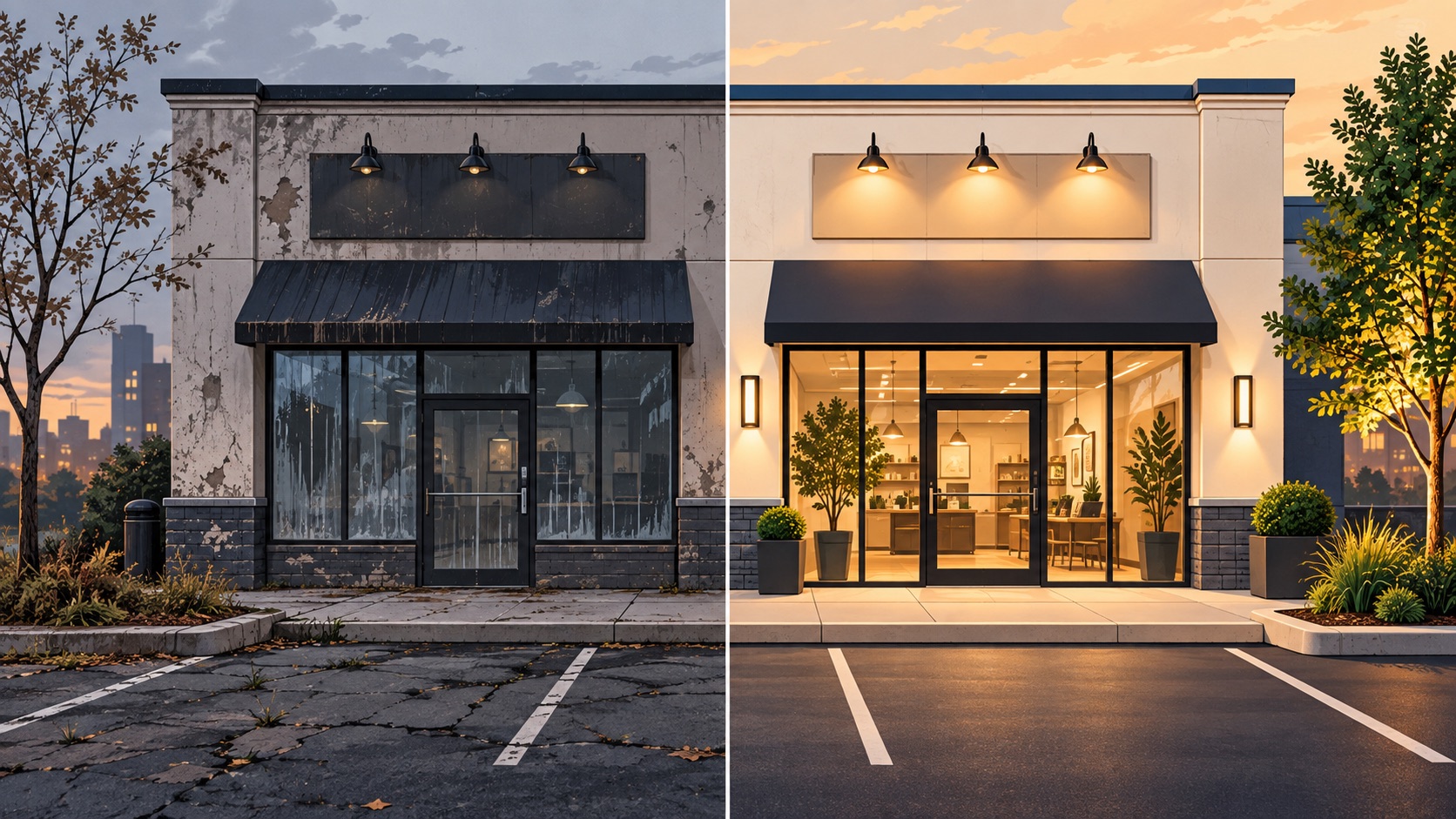
A commercial frontage can look tired even when the building is sound. A dark sign, stained walkway or entrance door that sticks is noticed on every visit. The fastest improvements usually come from fixing visible maintenance faults before commissioning a larger redesign.
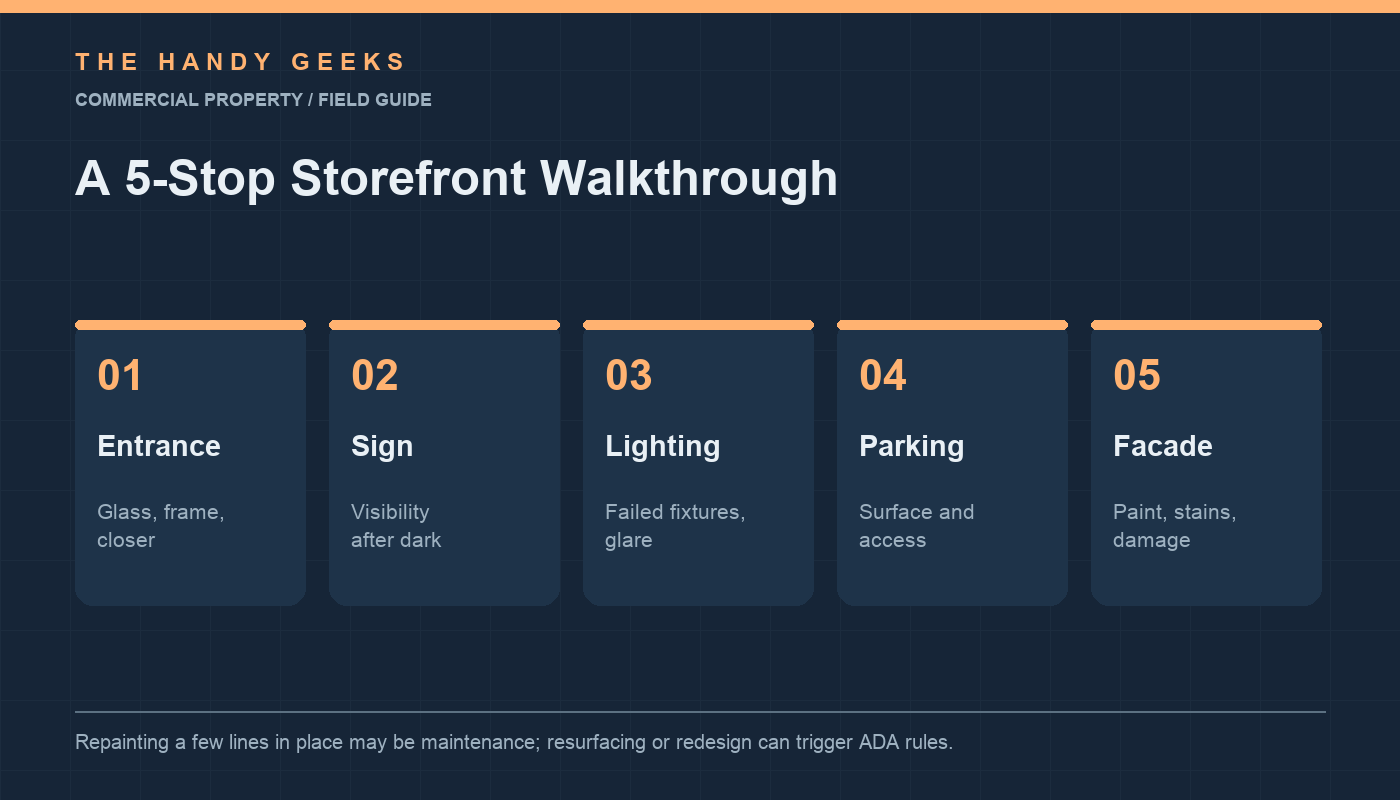
Short answer: Start a commercial curb-appeal plan with a daylight and after-dark walkthrough. Prioritize the entrance, sign, exterior lighting, parking approach and facade. Price each repair separately, then group compatible work into one visit. Review accessible parking before changing a lot’s layout or resurfacing it.
Last verified: September 2026. Return on investment depends on the property, tenant mix and starting condition; no fixed percentage is promised here.
Which Exterior Upgrades Come First?
Use the route a customer or tenant actually takes. A clean entrance and working sign may matter more to a small shop than decorative planters; a multi-tenant office may have a different priority. This order is a maintenance triage, not a measured ranking of returns.
| Area | What to check | Typical first action |
|---|---|---|
| Entrance | Glass, frame, door closer, threshold and clear route | Clean, adjust or repair the failed item |
| Sign and exterior lighting | Legibility after dark, failed lamps, glare and dark corners | Document the fault and scope qualified electrical work |
| Walkway and facade | Staining, peeling paint, loose trim and drainage | Clean first, then repair the underlying defect |
| Parking approach | Potholes, faded markings, access aisles and route to entry | Assess safety and accessibility before work is specified |
| Landscape and furnishings | Obstructed routes, overgrowth and damaged fixtures | Restore clear access and consistent upkeep |
Our storefront door guide explains why a door that looks fine may still need attention. For ongoing sites, bundle these observations into a commercial maintenance visit.
How Should You Judge the Return?
Do not put a universal “7% property value” or “30% more customers” figure into a project budget. Those numbers do not tell you what one repair will do for one property. Instead, record the starting condition, repair cost and a measure that matters to the business: recurring tenant complaints, vacancy tours, maintenance tickets, entrance use or customer feedback. Compare the same measures after the work. This gives the owner a usable result without pretending every storefront has the same return.
A phased plan also protects the budget. Clean and repair the obvious defects first. Consider repainting, new awnings or a landscape redesign only after you know which surfaces and systems are actually failing. Ask for an itemized quote so cleaning, repair and capital work are visible separately.
Does Parking-Lot Restriping Trigger ADA Requirements?
It depends on the scope. The US Access Board’s parking guidance says resurfacing, resealing and reconfiguring parking count as alterations that must include accessible spaces. Refreshing existing lines in place for a few spaces is generally normal maintenance, unless it affects usability. The earlier version of this article incorrectly said every restriping job is an alteration.
If the work is an alteration, the minimum number of accessible spaces is based on the size of each parking facility. For example, the federal table requires one accessible space for 1 to 25 total spaces, two for 26 to 50, three for 51 to 75 and four for 76 to 100. At least one of every six accessible spaces, or fraction of six, must be van accessible. Dimensions, access aisles, slope, signs and an accessible route to the entrance also matter. State and local rules may add requirements, so confirm the actual site plan before paint or paving begins.
Even where repainting is maintenance, maintaining access is still important. Photograph the current layout and ask the property manager or accessibility specialist to review any proposed change to accessible stalls, aisles or routes.
How Much Should You Budget?
Budget by scope rather than a generic “cost per upgrade.” An entrance cleaning, door adjustment, lighting repair and parking project use different labor, materials and qualified trades. The Handy Geeks’ published commercial hourly ranges give a market starting point, but the quote should show site access, after-hours work, materials, permits where needed and any specialty contractor separately. Combining compatible small items in one visit may reduce repeat call-out costs.
Who Approves the Work?
Check the lease and property rules before altering signage, facade, parking or common areas. A tenant may be able to clean its entrance while the landlord or property manager controls exterior paint, lighting or paving. For multi-site clients, ask for one approved scope and photo record per location so the finish and access standards stay consistent.
Frequently Asked Questions
What is commercial curb appeal?
It is the condition and appearance of a business property as people approach it, including the sign, entrance, lighting, walkway, facade and parking access.
What is the quickest first step?
Walk the route from parking to entrance both during the day and after dark. Photograph maintenance defects and prioritize those affecting access, visibility and safety.
Does repainting parking lines always count as an alteration?
No. The US Access Board treats a small refresh of existing markings in place as normal maintenance in many cases. Resurfacing, resealing or reconfiguring the facility is an alteration. Scope and local requirements still need review.
Can work be done outside business hours?
Often, yes. Discuss access, noise, drying time, tenant notices and after-hours pricing in the quote before scheduling.
Request a Frontage Walkthrough
Send the address and a few photos of the entrance, sign and parking approach. We can return a prioritized maintenance scope and flag work that needs a licensed specialist or accessibility review. Explore our portfolio or request a quote.