

How to Winterize a Commercial Building: A Practical Freeze Checklist
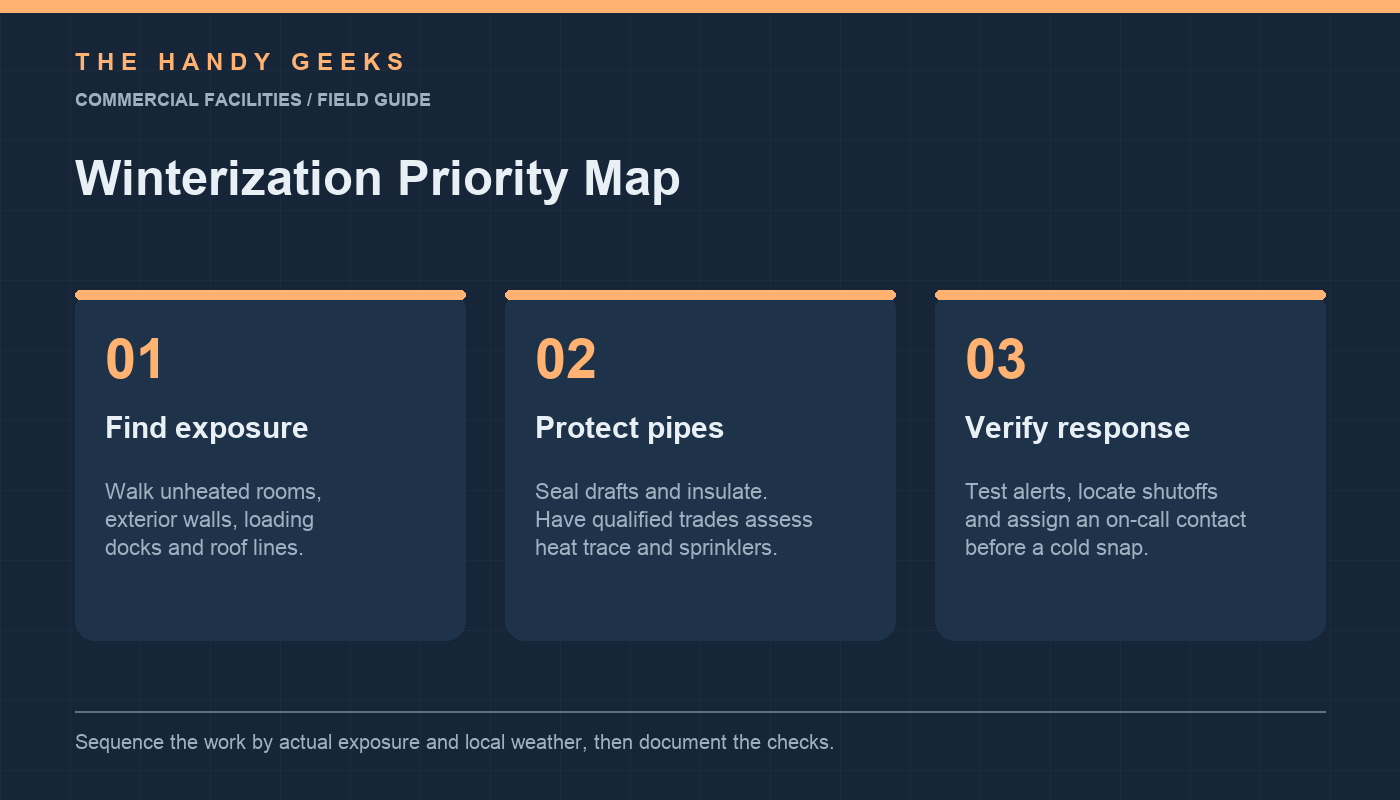
A cold snap does not need to freeze an entire building to cause a loss. One exposed pipe in a loading dock, roof area or unheated riser room can interrupt operations. The useful starting point is a walk-through of the vulnerable spaces, followed by a written plan for protection, monitoring and response.
Short answer: Winterize a commercial building by finding water lines exposed to cold air, sealing drafts, insulating appropriate pipes, checking heat and low-temperature alerts, and making sure staff know the shutoff and escalation procedure. Have qualified plumbing, electrical and fire-protection contractors handle work on those systems where required.
Last verified: September 2026. This is a planning checklist, not a site-specific design or a substitute for local code and manufacturer instructions.
If water is overflowing at one corner, here is how to unclog a downspout.
For where each alarm should go, see our smoke detector placement diagram and code guide.
Where Should a Facilities Manager Look First?
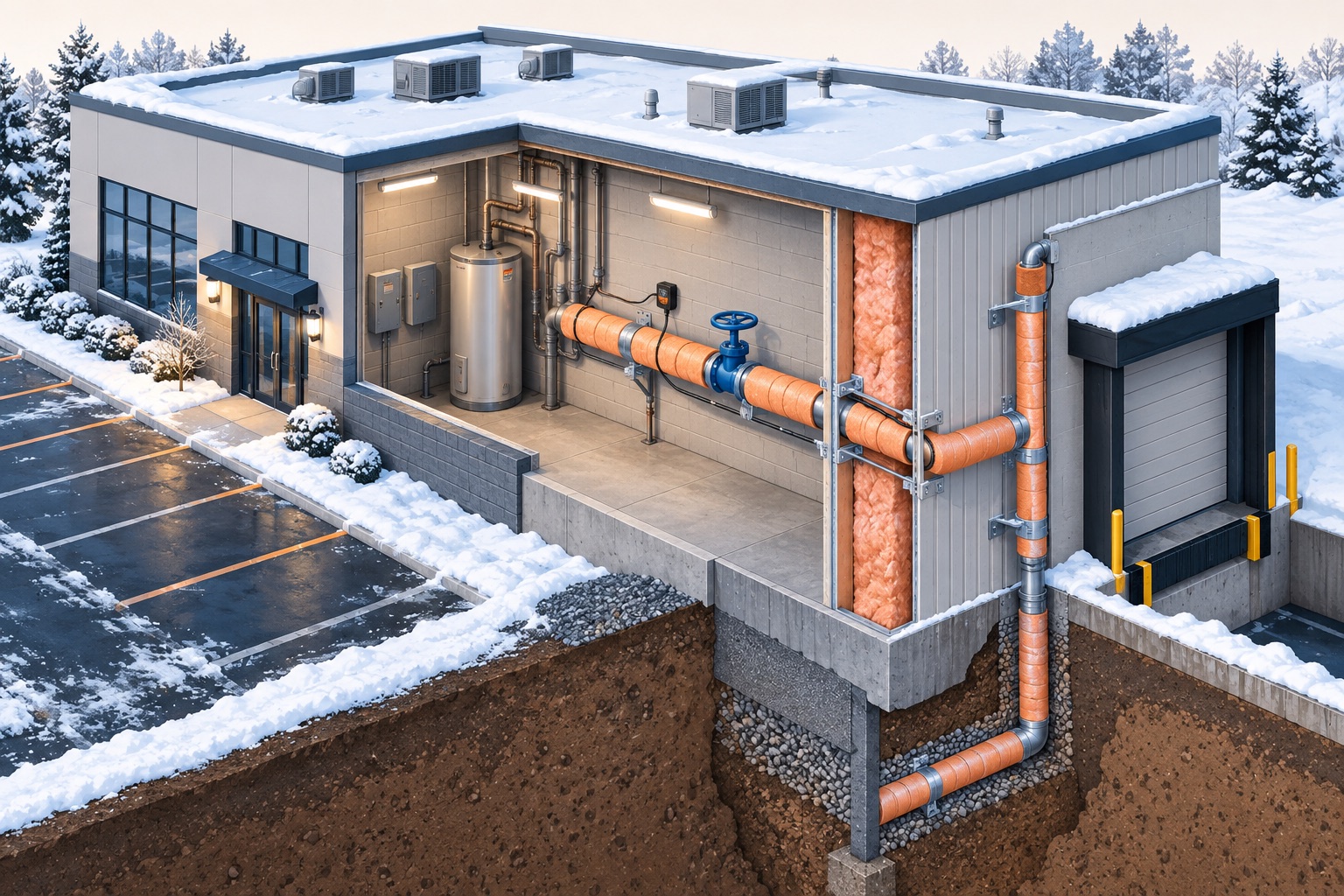
Start where the building loses heat or where water lines run outside conditioned space. Check exterior walls, loading docks, vacant suites, roof equipment, parking structures, unheated mechanical rooms, hose bibs, backflow assemblies and sprinkler riser rooms. Do not assume a mild regional climate protects an isolated pipe.
Make a simple location log: pipe or room, normal temperature, known drafts, existing insulation or heat trace, who owns the system, and the next action. Philadelphia Insurance Companies’ property-protection checklist specifically calls for temperature monitoring, sealed doors and windows, and attention to fire-protection piping. Our commercial plumbing guide covers other water-system weak points.
What Protection Belongs on the Work Order?
| Finding | Likely next step | Who should verify it |
|---|---|---|
| Draft at an exterior penetration or door | Seal the opening without blocking required ventilation or access | Building maintenance lead |
| Exposed domestic-water pipe | Check insulation fit and whether the surrounding space stays warm enough | Plumbing professional for system changes |
| Pipe still at risk after insulation | Assess listed heat-trace equipment, power and controls | Qualified electrical or plumbing contractor |
| Sprinkler or fire-riser exposure | Review protection, drainage, heat and impairment procedure | Qualified fire-protection contractor |
| Vacant or intermittently occupied space | Confirm heat, alerts, inspections and emergency contacts | Property manager and system contractors |
Insulation reduces heat loss, but it does not generate heat. A line can still freeze if the surrounding space remains cold long enough. The US Department of Energy’s pipe guidance recommends insulating pipes and air-sealing the wall cavity around exterior-wall runs. Heat trace requires a product and installation suited to the pipe and location; it should not be presented as a universal fix.
What Should Be Tested Before the First Freeze?
- Temperature and water alerts: verify sensor placement, alarm routing and the person who responds after hours.
- Heating: confirm that vulnerable rooms stay heated during nights, weekends, vacancies and power interruptions.
- Shutoffs: label the correct valves and make sure the on-call team can reach them.
- Fire protection: have the responsible contractor inspect freeze-prone sprinkler components and the impairment plan.
- Records: photograph exceptions, assign corrective work and repeat the checks after repairs.
Ready.gov’s business power-outage guide also calls out exposed-pipe insulation and water-supply planning when heat may fail. The checklist is more useful when it is part of a recurring commercial maintenance schedule than when it is rediscovered during a freeze warning.
When Should Winterization Be Scheduled?
Schedule the walk-through before the first local freeze forecast, then leave time for any trade work and a second verification visit. A fixed “six to eight weeks” rule is too blunt for Los Angeles, the Bay Area, Phoenix and Las Vegas: elevation, building exposure and local weather matter more than the calendar. If a cold alert is already active, focus on heat, monitoring, shutoffs and the emergency plan first.
What Will It Cost?
A defensible price needs the number and length of exposed runs, access conditions, insulation type, electrical work, sprinkler involvement and whether the building is occupied during the job. A generic per-foot table cannot represent those differences. Ask for an itemized scope that separates ordinary sealing and insulation from work that needs licensed trades. For context, our published commercial maintenance rates show the hourly range by market; they are not a winterization quote.
Frequently Asked Questions
Does pipe insulation alone prevent freezing?
No. Insulation slows heat loss. If a space stays below freezing, the pipe may still need reliable heat or a properly designed protection system.
Should heat trace go on every exposed pipe?
No. Assess the actual exposure, pipe type, power supply, controls and product listing first. A qualified contractor should design and install systems that require licensed work.
What about fire sprinkler piping?
Keep sprinkler protection in the fire-protection contractor’s scope. Frozen or damaged sprinkler components can create both water damage and a loss of fire protection.
Do buildings in warm cities need a winter plan?
Some do. Unheated spaces and exposed roof or exterior lines can see different conditions from occupied rooms. Prioritize the actual site exposure and local forecast.
Get the Exposed Areas Scoped
Send us the building address, photos of exposed lines and any previous freeze incidents. The Handy Geeks can help organize the walkthrough and quote maintenance items within our scope, then identify work for the appropriate trade contractor. See our project portfolio or request a site review.