

Why Your Door Closer Keeps Slamming (And How to Fix It)
You know that sound. You swing a door shut and instead of that quiet click, you get a bang loud enough to make someone look up from their desk. Office entrance, retail storefront, apartment building, your own front door, it doesn’t matter where. And truthfully, it really is not not just an annoying noise either. Left alone, it beats up the frame, loosens all the hardware, and eventually turns into a safety problem.
And something you need to understand: you usually don’t need to replace the whole unit (obviously). Most slamming closers can be fixed in quite literally just a few minutes once you know what to look for.
What a Door Closer Is Actually Doing
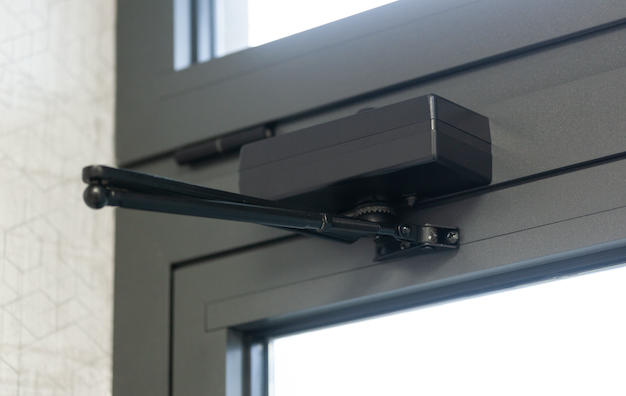
That metal arm mounted at the top of the door is what controls how fast it swings shut after someone opens it. Most commercial doors run on hydraulic closers, oil-filled chambers with adjustable valves that turn a free-swinging door into a smooth, controlled close.
Working correctly, the door opens without a fight, closes at a steady pace, latches quietly, and doesn’t bounce back open. If yours has started slamming, you now know that something is obviously not right.
If a door is sticking or won’t latch, our guide on how to fix a door that won’t close walks through each cause.
The Usual Suspects
The closing speed is set too fast
Nine times out of ten, this will be it.
Closers have two adjustment screws. One controls sweep speed, the main swinging motion. The other controls latch speed, the final few inches right before it clicks shut. Turn either one too far open and the door speeds up instead of easing in.
You’ll recognize this one: the door is noticeably faster than it used to be, there’s no oil anywhere on the unit, and it still latches fine, just too hard.
The Fix
The fix is small turns, no more than an eighth at a time, testing after each one. Don’t ever back an adjustment screw all the way out. That lets hydraulic oil escape and can ruin the closer for good.
The closer is leaking oil
Hydraulic closers run on oil pressure. Once that oil starts leaking, the closer loses its grip on the door’s speed no matter how you adjust it.
Look for oil stains on the closer body or a wet residue around the screws. If the door slams regardless of how you turn the adjustments, this is why.
The Solution
There’s no fixing this one. Once enough oil is gone, the closer needs to be swapped out.
It’s just worn out
Closers wear down the same as anything mechanical does. A commercial entrance opening hundreds of times a day puts real stress on the seals, springs, and valves inside.
Watch for closing speed that’s inconsistent from one swing to the next, occasional slams out of nowhere, a door that won’t latch the same way twice, and adjustment screws that barely change anything anymore. A solid commercial closer usually holds up for 10 to 20 years depending on how hard it gets used.
Spring tension is off
The internal spring is what pulls the door shut in the first place. Wrong tension for the door’s weight or width and it either slams too hard or won’t latch at all.
This shows up most after a heavier door goes in, hardware gets replaced, or someone made an adjustment without really knowing what they were doing. Spring tension is worth leaving to someone who works on commercial hardware for a living.
The arm assembly is loose or damaged
The arm is what moves the closer’s force to the door. Screws work loose over time, joints wear down, mounting brackets bend.
Check for loose bolts, a bent arm, worn joints, missing fasteners. Catch it early and tightening things back up usually solves it.
Weather is playing a role
Temperature changes the hydraulic fluid. Cold weather thickens it and slows the door down. Hot weather thins it out and the door closes faster. Newer closers often have valves that compensate for this, but plenty of older units still need a seasonal nudge.
The door itself is the actual problem
Sometimes the closer was never broken. A door that’s sagging, rubbing the frame, or binding on its hinges forces the closer to work harder than it should, and that shows up as slamming.
Check the hinges, the frame alignment, the strike plate, the clearance around the door. Fix the alignment and the closer often goes right back to normal.
Can You Fix It Yourself?
If the closer’s in decent shape and just needs a speed adjustment, sure. Go slow. Small turns. Test after every one. Don’t force the screws. Stop the second you see any oil. If the damage is internal, no amount of adjusting fixes that.
When to Just Replace It
You have got to replace the closer if you’re seeing steady oil leaks, a broken arm, a cracked housing, a spring that’s given out, screws that no longer do anything, or slamming that keeps happening even after you’ve adjusted it properly. Doing it now costs a lot less than fixing the frame and hinge damage that piles up from ignoring it.
Keeping It From Happening Again
None of this takes much time. Check for oil leaks every couple months. Keep the mounting screws tight. Lubricate the hinges when they need it. Make sure the door’s actually latching smoothly. Adjust the speed seasonally if the weather’s shifting. Replace worn hardware before it fails on its own timeline instead of yours. Buildings with heavy foot traffic are better off checking these on a regular schedule instead of waiting for someone to complain.
When To Hand It Over
Unlike rest of the services in the market often looking to add hidden charges, WE offer extremely reliable, friendly, and quick services. And our all 5-star reviews are just another proof of that. Our clients never leave disappointed.
- Experienced Technicians: We always hire experienced and reliable people. Everyone on the staff is highly capable in the field and will ensure your work is done properly.
- Quick and Reliable: Your time is valuable. This is why we ensure everything goes smoothly and you get your work done right away.
- 24/7 Emergency Repairs: Emergencies can happen where you need us. And we will be there for you, on time.
- Tailored Solutions: Our team evaluates your space to recommend and install the perfect bed set up.
- 100% Satisfaction Guarantee: All of our clients have left a 5 star review so you know, you can trust us.

You can look at our other service forms here.
You should also check out our Google Maps page
And here’s our phone number : +1 818-835-0556.
Frequently Asked Questions
Why is my door closer suddenly slamming?
Usually a bad speed adjustment, a hydraulic leak, worn internal parts, or loose hardware.
Can a slamming door closer be repaired?
If it’s an adjustment issue, yes. If it’s leaking or damaged internally, you’re better off replacing it.
How long should a commercial door closer last?
Somewhere around 10 to 20 years, depending on use and upkeep.
Is a slamming door actually dangerous?
Yes. It can hurt someone, damage the frame, loosen hardware over time, and cause accessibility issues.
Wrapping The Job Up
A slamming door closer is a five-minute fix while it’s still just an adjustment. Wait long enough and it’s a frame repair, a hinge replacement, and a bill that didn’t need to happen.
Anyways….
Need someone to take a look? We, at The Handy Geeks repair and replace residential/commercial door closers, hinges, locks, and panic hardware for offices, retail stores, apartment communities, and other properties across California. Get it looked at before it turns into something bigger.
📞 Call us
By prioritizing the projects that buyers value most, you as a homeowner can increase property value, enhance everyday living, and make smarter long-term investments in your homes.
If the door in question is a commercial storefront rather than a home entrance, the compliance side matters as much as the mechanics. We cover what the ADA requires of a storefront door, including the 5 pound rule and the closing-speed limit that fails inspection just as often.